An interview with Craig Jones, Royal Osteoporosis Society CEO, on closing the fracture care gap
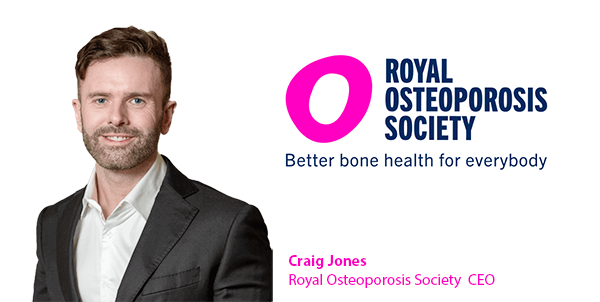
The Royal Osteoporosis Society (ROS) is the UK’s largest national charity dedicated to improving bone health and beating osteoporosis, with the impactful vision “No More Broken Bones. No More Broken Lives”.
Since 2022, with the launch of their ‘Breaking the Silence’ strategy, the ROS has been a key advocate for policy changes on Fracture Liaison Services (FLS) and secondary fracture prevention in the United Kingdom.
In this interview, ROS CEO Craig Jones reflects on the challenges, achievements, and remaining gaps for FLS in the country.
1. The Royal Osteoporosis Society’s 2025 Annual Report highlights continued progress toward nationwide FLS coverage. Where are you seeing the most tangible improvements on the ground, and where do gaps in delivery persist for coordinators?
Over the past couple of years we’ve seen really encouraging progress towards wider FLS coverage across the UK. Wales is a great example of what national leadership can achieve: FLS is now embedded in every local health system, there’s been a step change in patient identification and we’re seeing steady gains in key performance indicators right across the country. That’s thanks to a Ministerial commitment to achieving the clinical quality standards by 2030 – 80% identification, 50% treatment recommendation and 80% adherence follow-up. This top-down political leadership has been “best in class” in the UK.
In Scotland and Northern Ireland, we’re working closely with statutory bodies to strengthen governance and accountability for FLS. The Scottish Government have set up a new public audit. There’s a real willingness to improve the consistency and quality of care, and we’re optimistic that this joint approach will translate into better outcomes for patients over the next few years.
England is where the challenge remains most pressing and where a great deal of our national campaigns and influencing team focuses its energy. Only about half of NHS Trusts currently have an FLS, and that leaves huge gaps in post‑fracture care. That’s why we’re continuing to lead a national campaign for universal coverage. It’s been strongly supported—not only by two major national newspapers, but also by clinicians, business leaders, trade unions who want to see change. Alongside the national work, we’re supporting local teams and decision makers to make the case for new services and to strengthen those that already exist.
And we are starting to see the impact. In 2025 and early 2026, new NHS investment has helped establish four additional fracture prevention services, and there’s been £4.5m funding for new DEXA scanners too. That means thousands more people at risk of a secondary fracture are now closer to getting the treatments that can strengthen their bones and prevent further, often life‑changing injuries.
2. From your perspective, what are the most effective interventions FLS teams can prioritise right now to help close the post-fracture treatment gap?
I think the priority is getting the fundamentals right, and doing them really well. The latest Falls and Fragility Fracture Audit report again shows that timely identification, assessment and treatment initiation make the biggest difference—and that’s where services can have the most immediate impact.
Within that, we know that focusing on the people at highest risk pays dividends. That means actively looking for patients with vertebral fractures and those with multiple fragility fractures, because they’re the people most likely to fracture again soon if we don’t intervene.
And of course, it’s not just about starting treatment—it’s about helping people stay on it. Good follow‑up, clear communication and monitoring adherence really do reduce re‑fracture risk.
The good news is that digital FLS systems are beginning to make this much easier. They’re helping teams find more eligible patients, streamline assessments and keep a closer eye on whether patients are progressing through the pathway. That gives teams the space to focus their energy where it’s most needed.
3. What changes do you think are still needed to ensure FLS can deliver the highest quality of care to their patients?
For FLS to consistently deliver the quality of care we want to see, they need the resources and capacity to support people through the whole pathway—not just the early steps. Some services can only do parts of the model, and that means patients at high risk can fall through the cracks or drop off treatment.
A big part of this is making sure teams have the ability to manage those with more complex or severe risks, including people with vertebral fractures or recurrent fragility fractures. These patients often need more time, more follow‑up and more clinical input.
But ultimately, services can’t solve this on their own. At the ROS we have set up an FLS service development support team and invested in tools that can help clinicians make the case for FLS investment, but we need stronger national leadership—clear expectations for universal access to secondary fracture prevention, and the investment to make that a reality. Until then, we’ll continue to see variation across the country, and too many people will miss out on support that could prevent a life‑changing fracture.
4. What role can FLS have in supporting advocacy and policy development in the field?
Fracture Liaison Services have an increasingly important role in shaping both advocacy and policy development across the osteoporosis and fracture‑prevention landscape. What makes their contribution so valuable is the combination of real‑time clinical insight, direct exposure to patient experience and access to high‑quality data. Together, these position FLS teams as authoritative voices in national conversations about standards, commissioning and improvement. Their impact is especially clear in five key areas:
- Supplying robust, real‑world data to inform national policy
FLS teams across England, Northern Ireland and Wales are at the forefront of contributing to the Fracture Liaison Service Database (FLSDB), generating some of the strongest evidence available on secondary fracture prevention. Policymakers, campaigners and commissioners increasingly rely on these data to shape standards, target resources and evaluate the impact of service change. The dataset highlights care gaps, quantifies unmet need, exposes inequalities and demonstrates where investment delivers measurable improvements.
- Elevating patient experience and lived‑experience insights
Because FLS teams work so closely with patients, they develop a clear understanding of the barriers people face—whether that’s accessing timely assessment, navigating their diagnosis or remaining on long‑term treatment. This perspective is essential for grounding policy in real patient journeys. By working alongside patient organisations, such as the Royal Osteoporosis Society, FLS practitioners help ensure that both clinical and lived‑experience voices are heard by national and local decision makers.
- Showcasing what high‑quality, cost‑effective care looks like
High‑performing FLS demonstrate, in practical terms, the value of systematic case‑finding, timely assessment and optimised treatment pathways. Their outcomes—fewer avoidable fractures, reduced hospital admissions and clear cost savings—provide powerful proof of concept for governments and commissioners. By sharing service models, innovations and improvement initiatives, FLS teams help shape national guidance and influence investment in scaling effective approaches.
- Partnering in national campaigns and professional advocacy
Many FLS clinicians contribute directly to national advocacy efforts, including those led by the Royal Osteoporosis Society. Their involvement lends credibility and clinical authority to campaign messages, ensuring that policy proposals are rooted in everyday practice. These clinicians also play an influential role in conversations with MPs, health leaders and local decision‑makers, amplifying system‑wide calls for better fracture prevention.
- Driving quality improvement and contributing to national standards
FLS practitioners are integral to the ongoing development of quality standards, audit measures and clinical guidance. Their on‑the‑ground experience shapes updates to national toolkits, pathways and training programmes, helping ensure that standards are not only evidence‑based but also practical and deliverable in real‑world settings.
Learn more about the work carried out by the Royal Osteoporosis Society