Korean study shows FLS saves lives and prevents refractures
Hip fractures in older adults cause high mortality, long hospital stays, and increased risk of secondary fractures. Traditional care often focuses on surgery, with less attention to long-term bone health. Fracture Liaison Services (FLS) are coordinated, multidisciplinary programmes that ensure timely surgery, optimal osteoporosis treatment, and structured follow-up.
A prospective cohort study at Daejeon Eulji Medical Center, Eulji University School of Medicine—the first coordinator-based FLS implemented in Korea —compared outcomes before and after the introduction of a coordinator-based FLS. The results showed strong clinical benefits.
Key Benefits
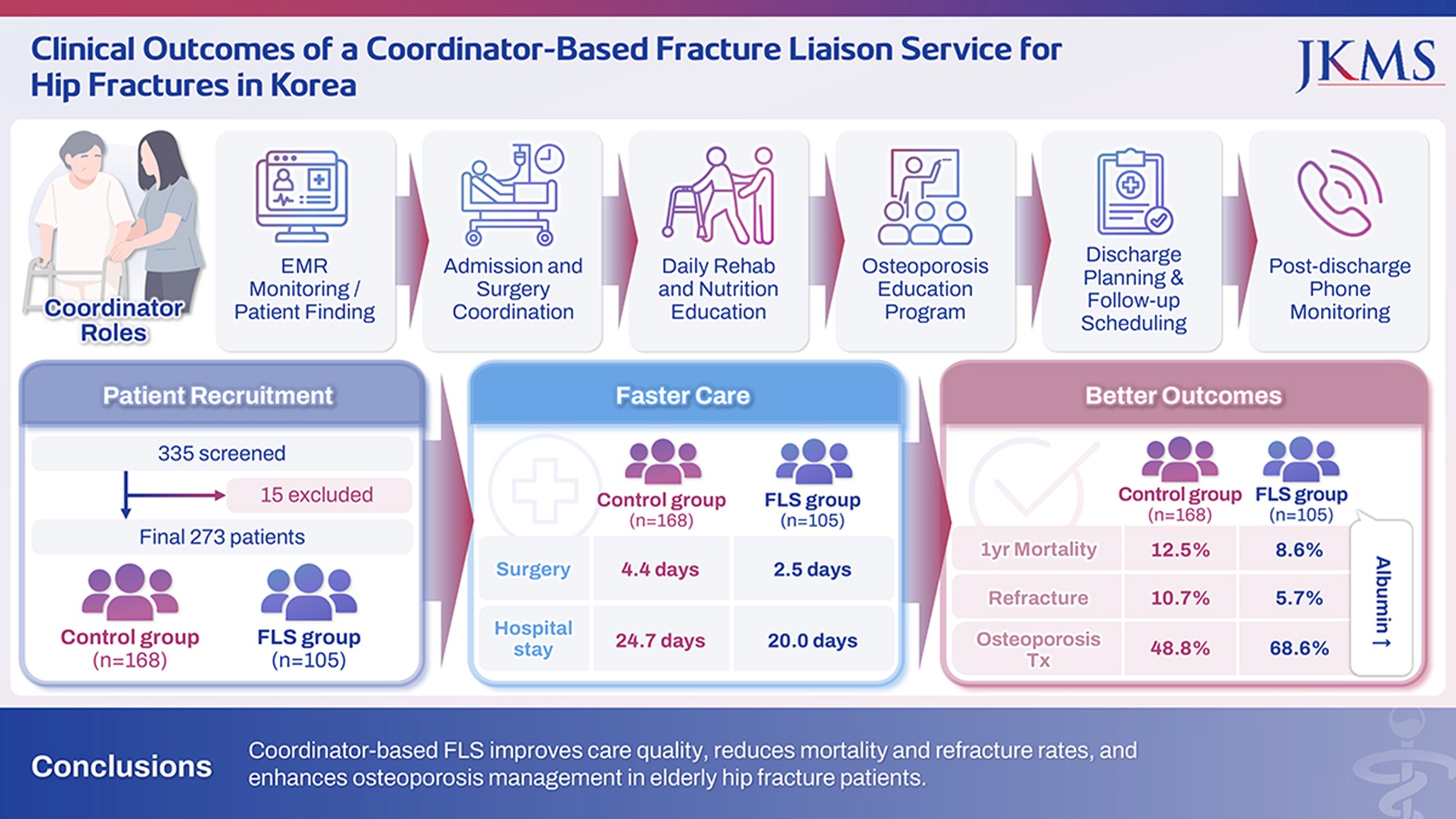
- Faster surgical care and shorter hospital stays: Patients managed through the FLS had a significantly shorter time from admission to surgery (2.5 vs. 4.4 days), and reduced overall hospital stay (20.0 vs. 24.7 days), reflecting more efficient perioperative coordination.
- Lower mortality and refracture rates: Patients managed through the FLS had lower in-hospital (1.0% vs. 4.2%) and 1-year mortality (8.6% vs. 12.5%) rates. Refracture rates were nearly halved in the FLS group at both 6 months and 1 year.
- Increased osteoporosis treatment and improved nutrition: Patients receiving FLS care were significantly more likely to receive osteoporosis medication during hospitalization (68.6% vs. 48.8%). Calcium and vitamin D supplementation was also markedly higher in the FLS group (63.8% vs. 15.9%). In addition, serum albumin levels improved during follow-up, increasing from 4.0 ± 0.3 g/dL at admission to 4.4 ± 0.5 g/dL at one year, suggesting improved nutritional management as part of the coordinated care model.
- High patient and caregiver satisfaction: Patient and caregiver satisfaction with the coordinator-based service remained consistently high throughout follow-up. Before discharge, 97.7% of respondents reported satisfaction (strongly agree or agree), and satisfaction rates remained above 90% at 3 months, 6 months, and 1 year after surgery.
Despite these positive clinical effects, functional recovery measures did not differ significantly within the first year, highlighting areas for future refinement in rehabilitation integration.
“The implementation of a coordinator-based FLS has allowed us to deliver more timely and holistic care for elderly hip fracture patients—improving survival, reducing refractures, and ensuring continuity beyond the acute hospital stay,” said Yonghan Cha, MD., corresponding author of the study and FLS mentor at Capture the Fracture®
As populations age, FLS models like this may play a crucial role in improving outcomes and preventing further fractures. It is hoped that the positive findings from this study will provide momentum for the expansion of FLS programmes across Korea and beyond.
Reference:
Kim SH, Cha Y, Kim JH, Yoo JI, Kim JT, Kim JW, Choy W. Clinical outcomes of a coordinator-based fracture liaison service for hip fractures in Korea. J Korean Med Sci. 2026 Jan 12;41(2):e26. doi: 10.3346/jkms.2026.41.e26.